



Some people choose the same six numbers for years. Others change them every week because they worry their old combination has somehow gone cold. There is no mathematical requirement to change a valid lottery combination between independent fair draws.
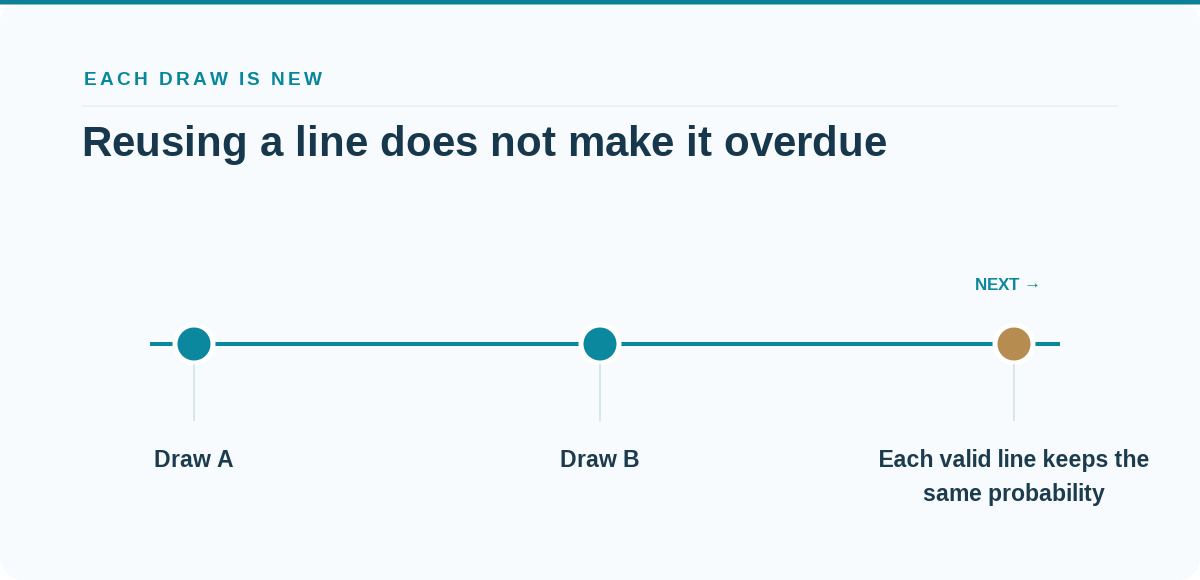
Whether you reuse a line or generate a new one, its probability in the next draw is the same as that of any other valid line for the same game and format.
The draw does not recognise loyalty
A lottery machine does not know that a player has been loyal to a particular sequence. It does not reserve that combination for a future reward, nor penalise it because it appeared in the past.
If you use the same line for 100 independent draws, each draw is another chance for that exact line to match. The cumulative probability of at least one hit across a defined number of draws can be calculated under independence assumptions, but that is about repeated opportunities — not a strengthening of the numbers themselves.
Why changing numbers can feel safer
People often worry that keeping the same numbers could lead to regret if they miss one draw. Others fear that the moment they switch, their old combination will appear.
Both feelings come from imagining a relationship between personal choices and a random future event. It is easy to attach a story to a chance outcome; that doesn't establish causation.
If the emotional pressure of tracking numbers is unpleasant, stepping away from lottery participation is a perfectly sensible response.
What if you miss one draw with your usual numbers?
People who regularly use the same line sometimes worry that skipping a single draw is especially dangerous. They imagine that the combination has been waiting patiently for a particular date.
In a fair independent process there is no memory of the player's purchasing history. Missing an entry means you did not have that official opportunity; it does not create any special probability for the next draw or a debt the machine must settle.
If the worry about missing out becomes stressful, consider whether continued participation is still enjoyable. A number selection should not become an obligation you feel unable to pause.
A saved line is simply information. The future draw cannot see whether you kept it, deleted it or bought a ticket with it last week.
When new numbers actually make practical sense
A game may change its ball pool, ticket format or special-ball rules, making an old line invalid or incomplete. In that case, you need to update your selection to meet the current official rules.
You might also simply want novelty, or a generator may help you create a new example for a classroom demonstration. Those are legitimate reasons that do not depend on a supposed prediction advantage.
The arithmetic of repeated independent attempts
For a toy game with exactly 100 equally likely full combinations, one fixed valid line has a 1% chance of matching the jackpot in a single fair round. Across ten independent rounds, the chance it matches at least once is 1 − (99/100)^10, or about 9.56%.
Crucially, that same expression applies if you choose a new valid line before each round, assuming the selection process has no information about the future draw and you still have one line per round. The change from old numbers to new numbers does not produce an extra advantage.
This example is not a recommendation to repeat paid entries. It simply separates the mathematics of more independent opportunities from the superstition that numbers gradually become lucky or unlucky.
If the lottery changes its rules or a ticket covers multiple rounds, use the actual game-specific model instead of applying a single-round formula blindly.
Fresh numbers do not erase a losing streak
Using the same valid combination again in an independent draw does not become better or worse because it previously lost. Drawing a brand-new line also starts with the same per-line probability for that game. Change your numbers if you enjoy the variety; keep them if you prefer the ritual. Neither choice changes the fairness of the next draw.
A useful distinction: number combinations versus tickets
Saving a combination on your phone is not the same as entering an official draw. If you decide to participate, only a valid ticket accepted under the operator's rules counts as an entry. Keep the game, draw date and purchase status separate in your records.
LottoLuma's draw calendar can help you understand published schedules, while its generator guide explains creating new number lines. Neither replaces an official ticket or guarantees participation.
The right frequency for generating numbers is whenever you have a genuine reason to create a new selection. There is no secret renewal interval that changes lottery probability.
Sources and further reading
Reference links support the article's factual and technical framework. Verify the current game version and editorial wording again before publication.