



Most people focus on the jackpot line. Lottery tickets, however, can contain several distinct prize conditions: matching some main balls, matching a bonus ball, matching special numbers or satisfying additional product-specific requirements.
A generator helps you create an eligible selection. The official game's prize rules determine what that selection might win, not the generator's appearance or name.
One combination can contain several number pools
Powerball uses five white balls and one red Powerball. EuroMillions uses five main balls and two Lucky Stars. To discuss prize tiers meaningfully, you need to know which pool each match came from.
“Matched five numbers” can mean very different things depending on the game and whether a special ball was among them. A generic generator that prints an unlabeled list cannot explain those distinctions well.

What the generator knows
A well-designed game-specific generator can know the valid ranges, how many numbers are selected and how to display the parts of the line. Some tools also help compare a saved line with a manually entered official result.
That does not make the tool the authoritative prize adjudicator. Draw dates, special rules, supplementary features, claim requirements and operator corrections still matter. The official operator determines eligible winners under its published procedures.
A worked illustration
Suppose a hypothetical game requires five main numbers and a separate special number. A line matches four main balls but not the special number. Its prize position, if any, depends entirely on whether that particular operator awards a prize for four main matches.
If the generator mistakenly treats the special number as another main ball, its displayed match total can be misleading even if the underlying lottery numbers are correct.
The lesson is to check the definition of a matching event, not simply the count of identical digits on a screen.
One wrong bonus-ball label can change the whole explanation
Consider a game in which the player chooses five main numbers and a separate special number. If a checker merges all six values into one unsorted pool, it might report a match that is invalid under the actual tier definitions.
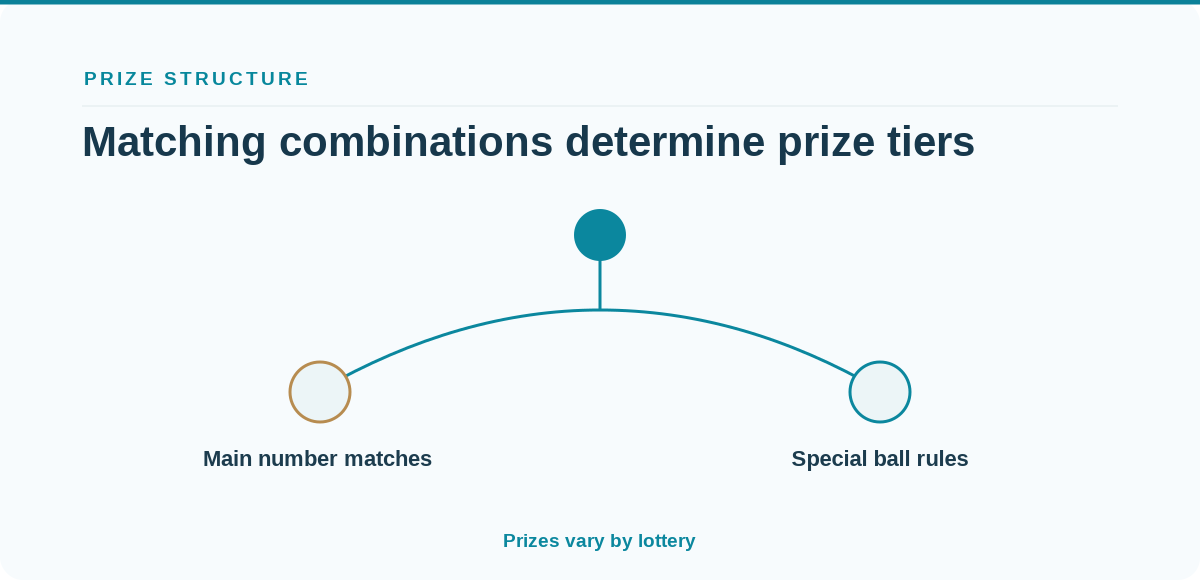
Even if a number happens to be the same digit in two pools, a match in the special pool is not automatically a main-number match. Each pool is part of a different condition.
A well-designed game page therefore labels the positions clearly. A professional article also reports odds for the specified match event, rather than quoting one overall “chance of winning” figure as if it applied to every possible prize.
Small distinctions like these are exactly where lottery expertise shows itself.
Odds of any prize are not jackpot odds
An operator's overall prize probability can combine several ways of winning. It is usually much less remote than matching every number required for the top prize.
For instance, Powerball publishes a grand-prize chance of one in 292,201,338 and separate probabilities for lower prize categories. Those figures describe different events and shouldn't be swapped in an article or advertisement.
Use LottoLuma's probability explorer to study matching events, and the FAQ to check what game studios do and do not represent.
A match checker can be mathematically correct and still incomplete
Imagine a game with a separate supplementary draw. Your checker compares the six main values and correctly reports three matches against the principal draw. If it ignores a second-round prize condition that is part of an official ticket, its conclusion about all possible prizes could still be incomplete.
That is why good interfaces carefully separate “numbers matched in this comparison” from “official prize awarded”. The first may be a straightforward calculation. The second may depend on claim rules, draw dates, bonus balls, price options or operator verification.
For a reader, the safest procedure is to retain the original ticket, compare the correct draw and consult the official operator's current prize and claim pages. A third-party number generator is best understood as an organisational aid rather than the final authority.
Why matching the “right number” is not enough
Consider a game with five main balls and a separate special ball. A number that appears in the special pool cannot automatically be treated as a match in the main pool. Prize tables depend on where matches occur, not just how many digits appear somewhere on the ticket. A good generator labels the pools; an official results checker remains the authority for prizes.
The final check belongs with the operator
A generated combination is not a purchased ticket. A visually matching line is not automatically proof of an entitlement. Always use the official result and the relevant operator's prize procedures to verify an actual entry.
A number generator is a selection instrument. The official game rules are the prize book.
Sources and further reading
- Powerball — official prize and odds chart
- Irish National Lottery — EuroMillions game information
- LottoLuma — FAQ and number selection methods
Reference links support the article's factual and technical framework. Verify the current game version and editorial wording again before publication.