



A ticket photograph, a set of numbers in a notes app and a calendar reminder may each seem adequate on their own. Put them together across several games and months, though, and a basic organisational problem appears: which numbers were generated, which tickets were purchased, and which draws have already taken place?
A dependable tracking system separates those facts rather than combining them into one vague record.
Use two different statuses from the start
Generated means the numbers exist in your records. Entered means you have a valid official ticket for a particular draw under the operator's rules. These are not equivalent, and mixing them can create false assumptions about entitlement to a prize.
If you purchase an entry, record the relevant official ticket information and protect any identifiers. Do not post ticket barcodes or account details publicly.

A minimal record that actually works
For each entry or example, capture: lottery name, country/operator, intended draw date, main numbers, special numbers, generation date, purchase status and the location of any official ticket evidence.
Optional fields include the method used to choose the line, a personal note and the date the result was checked. You do not need a complicated database to make these distinctions clear.
Why dates matter more than people expect
Lottery formats can change. UK Lotto's move to two rounds in June 2026 is a reminder that a game name alone may not specify the rules in effect at the time.
If you keep historical records, note the relevant version of the game format. Similarly, a schedule shown in your local time zone may differ from the operator's published draw time.
When a simpler tracker is a better tracker
A large automated app may offer alerts, cloud synchronisation and historical charts. If you only need to record a few occasional example lines, those features can add complexity and unnecessary data sharing.
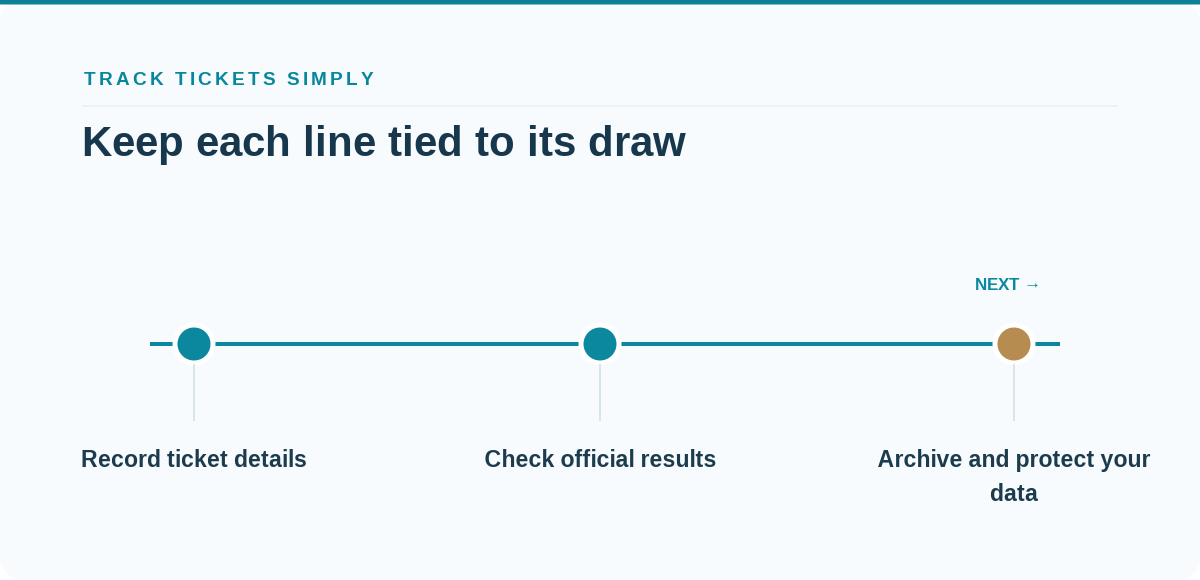
A small spreadsheet with clear headings may be enough. Its usefulness depends on whether you can identify the game, date, numbers and status correctly, not on how many widgets the interface provides.
If you do use a more sophisticated tool, test how it handles missing results, changed rules and duplicates. More automation is not always more accuracy.
A tracking method is successful when you can confidently answer a basic question later: what did I record, and was it ever entered as an official ticket?
Checking results without inventing certainty
Use official results and the appropriate prize rules. A third-party result checker can be a convenience, but it should not be the sole authority for a significant prize claim.
Check special pools separately and verify that you are comparing the correct draw, not simply the latest one displayed on a website.
Build the habit of closing the loop
After a relevant draw, record the official result source and mark whether the stored entry was checked. If you have an actual ticket with a possible prize, follow the operator's claims process rather than relying solely on a third-party comparison.
If you have only generated examples, you can record the outcome as part of a statistical exercise, but keep the status separate from purchased tickets.
Periodically archive or delete old example lines you no longer need. A record-keeping method that produces hundreds of unlabelled screenshots eventually becomes a source of confusion rather than clarity.
The aim is to spend less time wondering what each set of numbers meant, not to create an obligation to watch every draw indefinitely.
Separate three kinds of evidence
A generated-number list documents a suggestion. A purchase confirmation documents an official entry. An official result records what the operator drew. Store these as separate records with matching draw identifiers rather than assuming one substitutes for another. This is especially important when keeping entries for multiple countries or helping a group organise shared selections.
A practical spreadsheet structure
Keep one row per distinct generated line or purchased ticket, with a unique record identifier. For entries that repeat the same numbers on multiple dates, preserve each draw date separately. For combinations that differ only in the order of main numbers, you can store a sorted signature for duplicate checking.
LottoLuma's draw calendar, features page and history guide can help you organise the surrounding information. These tools do not automatically establish that an official entry was made.
A good tracking system should reduce uncertainty, not create a new reason to spend time constantly checking for results. Keep it light, accurate and proportional to the activity.
Sources and further reading
- UK Gambling Commission — National Lottery integrity information
- LottoLuma — draw-history file guide
- LottoLuma — tools and features
Reference links support the article's factual and technical framework. Verify the current game version and editorial wording again before publication.