



A lottery retailer may see hundreds of tickets in a working week. That experience is useful for understanding how people buy entries, but it doesn't turn the shop counter into a source of predictions about tomorrow's draw.
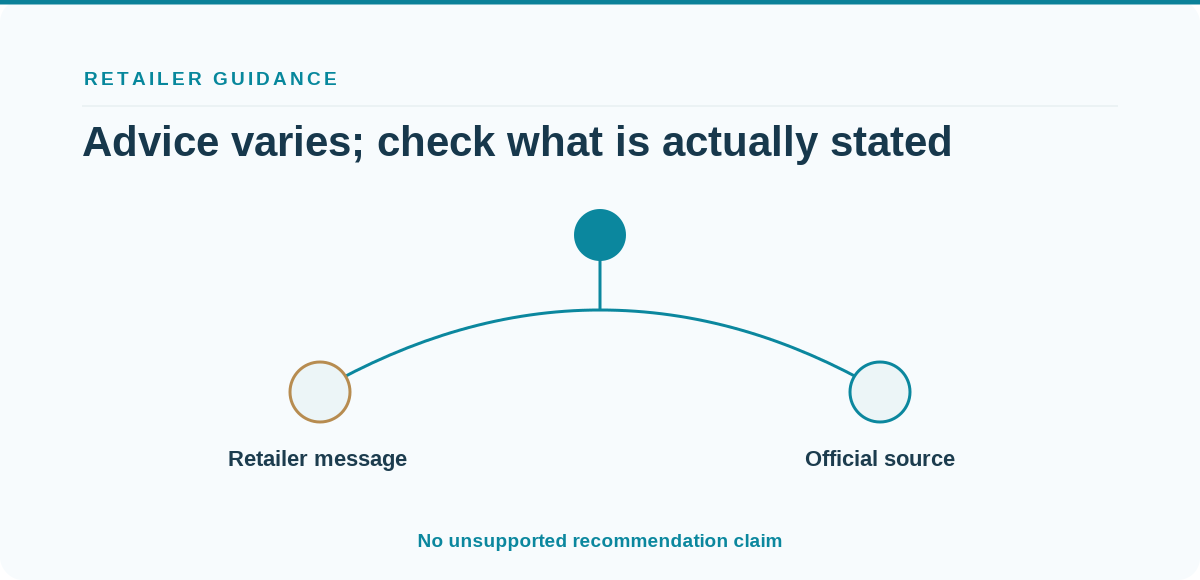
There is no verified universal recommendation from lottery retailers that Quick Pick is mathematically better than manual selection. Any advice should be judged against the official rules and the actual purpose of the method.
What retailers and terminals actually do
A retailer's terminal may offer a computer-generated selection alongside an option to enter a customer's own numbers. The system's role is to create and record an eligible entry, not to identify the six most likely balls.
A customer might request Quick Pick because it is convenient. Another might ask for a line based on birthdays. Both are ordinary ways of obtaining valid combinations, subject to the game's particular rules.
What a retailer can usefully help with is understanding the purchase process, checking that the correct game and number of entries were selected, and explaining where to find official prize and claim information.

Why a recommendation can be misleading
Imagine an employee saying most of the local winners used Quick Pick. That could be a perfectly sincere observation. But if most tickets bought in the shop were Quick Pick tickets, the statement tells us very little about comparative odds.
This is the same base-rate issue Powerball addressed in an April 2024 official statement. The organisation said computer selections accounted for a large majority of historical jackpot-winning tickets but explained that computer selections also dominated ticket sales.
An individual valid combination doesn't become more likely to be drawn because a machine selected it.
Convenience can be a perfectly legitimate reason
A retailer does not need to make a mathematical claim to recommend computer selection as a convenient option. A customer who is unfamiliar with the game may appreciate an automatically formatted valid line, while somebody who enjoys personal numbers may prefer manual entry.
There is no contradiction here. Two products can offer the same underlying winning probability while differing in speed, ease of use and error prevention.
This is a useful way to interpret public lottery statements. Rather than asking whether Quick Pick “beats” manual selection, ask whether it reduces the practical work of producing a valid ticket.
The answer can be yes without turning a convenience recommendation into a prediction claim.
The questions worth asking at the counter
If you are participating in a lottery, useful questions concern the current draw format, ticket price, cut-off times, eligibility, how to check results and how prizes are claimed. Check any answers against the operator's published information because rules can change.
A particularly important distinction is between a ticket terminal's computer-selected line and an independent website that only displays numbers. A number generator does not itself submit an official entry. LottoLuma is an information and number-selection website, not a retailer or official lottery operator.
Why “most winning tickets here are Quick Pick” isn't a sales argument
Suppose a retailer sells 900 computer-selected tickets and 100 manually selected tickets during a particular period. Even if the methods are equally effective per valid ticket, computer-selected entries have nine times as many opportunities to be represented among winning tickets in that shop's results.
Without those sales figures, a simple tally of winning methods is incomplete. The same logic applies when an operator announces how many jackpot-winning tickets were computer-selected in a historical period.
A retailer may recommend Quick Pick because it is quick, convenient and avoids transcription mistakes. Those are perfectly sensible reasons for a preference. They are not evidence that the computer knows something about the forthcoming draw.
A useful independent website should make exactly the same distinction when it explains why using a number generator can be convenient without changing the individual probability of winning.
A retailer’s convenience advice is not probability advice
Retail staff can help explain purchase options, cut-off times and how a Quick Pick is entered. Those practical recommendations are not proof that one selection method has higher odds. If you encounter a claim about retailer preferences, ask for an attributed source and a clear distinction between what is convenient to buy and what is more likely to win.
How to choose between the methods
Use Quick Pick when you want convenience. Use personal numbers when the act of choosing is part of the enjoyment. Use a documented independent generator when you want to prepare an example line before deciding what to do with it.
LottoLuma's how-to guide explains the latter option. The lottery directory helps you check the format of the relevant game.
The most credible recommendation is not “choose this method to win more”. It is “use a valid method you understand, read the rules and keep costs within your limits”.
Sources and further reading
Reference links support the article's factual and technical framework. Verify the current game version and editorial wording again before publication.